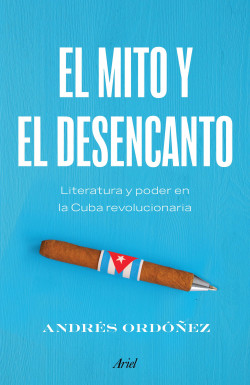
El mito y el desencanto
Literatura y poder en la Cuba revolucionaria
Ariel · Mexico City · 2022
A study of the relations between literature, nation and power in Cuba, from the formation of the republican literary tradition to the passage of the revolutionary imaginary from myth to disenchantment. In his foreword, Rafael Rojas places the book within the long tradition of reflection on literature as a representation of the Cuban nation.
Bibliographic details
Author: Andrés Ordóñez
Foreword: Rafael Rojas
Publisher: Ariel
Place of publication: Mexico City
Publication: 18 November 2022
Pages: 232
Format: Paperback with flaps · 15 × 23 cm
Language: Spanish
Print ISBN: 978-607-569-374-3
Digital ISBN: 978-607-569-495-5
Available from
Editorial Ariel / Planeta de Libros →
Purchase links are provided as a service to readers and may vary according to availability.
About the book
El mito y el desencanto examines the relationship between literature, national identity and political power in Cuba from a long-term historical perspective. The book traces the formation of a literary tradition closely linked to the construction of the nation, from José Martí and the intellectual generations of the first half of the twentieth century to the aesthetic and ideological plurality that preceded and accompanied the 1959 Revolution.
In his foreword, Rafael Rojas places the essay within the tradition that has understood Cuban literature as a privileged form of representation of the nation. He particularly highlights the book’s attention to the diversity of the canon at the time of the revolutionary victory and to later generations, in which commitment, dissent, exile, aesthetic experimentation and the transformation of political imaginaries coexist.
The narrative moves from the high point of revolutionary literary nationalism to the first expressions of disenchantment. Writers such as Guillermo Cabrera Infante, Heberto Padilla, Severo Sarduy, Edmundo Desnoes, Norberto Fuentes, Leonardo Padura and Pedro Juan Gutiérrez are linked to the major episodes that reshaped Cuban experience: the Angolan war, the Ochoa affair, the collapse of the Soviet bloc and the Special Period. Literature and political history thus intertwine to reveal the succession of consensus and dissent that has accompanied the transformation of the Cuban nation.
Rojas ultimately interprets the book as a contribution to the Ibero-American debate on Cuba, written from the dual experience of a scholar and diplomat with first-hand knowledge of the island and its cultural life.

